It arrives somewhere between late afternoon and the first dark of Sunday evening: a low, creeping dread that has nothing to do with anything actually happening. The weekend isn't over, yet somehow it already is — because your mind has left early and gone to Monday without you.
The "Sunday scaries" are so common they've become a joke, which is a shame, because they're neither trivial nor mysterious. They have a specific mechanism, and the mechanism has specific fixes — most of which, counterintuitively, happen on Friday.
What Sunday Dread Actually Is
Two ingredients, stacked.
Ingredient one: anticipatory stress. Your stress system doesn't wait for events — it responds to forecasts. On Sunday evening, the brain starts simulating the week ahead, and a simulated difficult Monday produces real cortisol today. You are, physiologically, paying for meetings that haven't happened yet.
Ingredient two: open loops. Unfinished tasks and undecided decisions occupy the mind disproportionately — psychologists have studied this since the 1920s as the Zeigarnik effect: incomplete things keep intruding on attention until they're either done or concretely planned. Friday's abandoned to-do list doesn't stay at the office. It runs as background process all weekend and surfaces, loudly, the moment the weekend's distractions thin out — which is exactly Sunday evening.
Anticipation provides the dread; open loops provide the content. The fix targets both.
The Friday Shutdown — the Fix That Works Before It's Needed
The single most effective intervention for Sunday dread happens around 4:30pm on Friday and takes fifteen minutes. The research insight underneath it: open loops quiet down not when tasks are finished, but when they have a specific plan. You don't need to do the things. You need to decide when and where they'll happen.
The ritual:
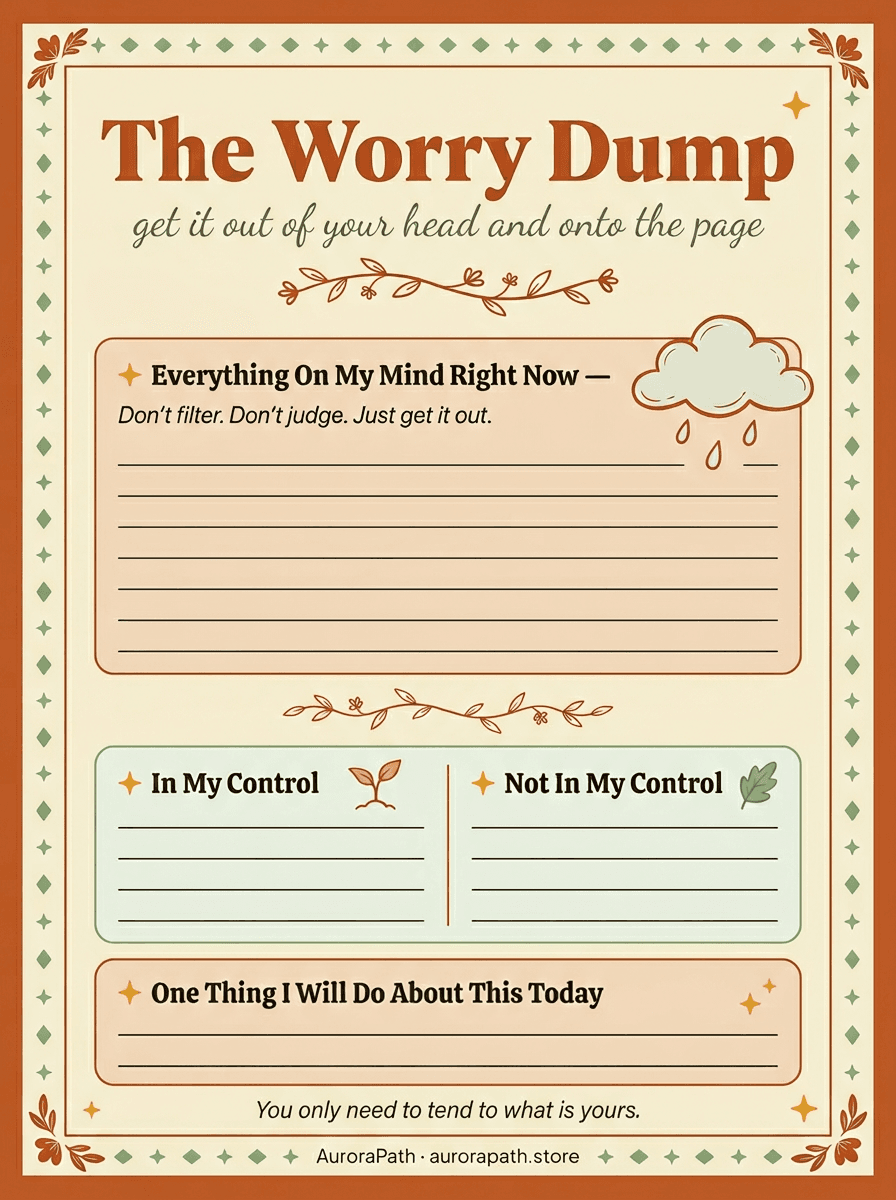
- Empty everything onto one list. Every unfinished task, every awaiting-reply, every "must remember." Out of your head, onto a page or doc. Five minutes.
- Write Monday's first move. Not Monday's plan — just the first 30–60 minutes. Monday begins with: finish the budget summary, then reply to Dana. This is the move that drains anticipatory stress, because the brain's vague simulation of "Monday" gets replaced by one concrete, manageable scene.
- Note the week's three big rocks. Three things that matter next week. Not ten. Three.
- Close it with a marker. Physically shut the laptop and say — internally or out loud — some version of the week is closed. Ritual endings sound silly and work anyway; the brain takes its cues from markers.
People who do this consistently report the same thing: the weekend feels longer, and Sunday evening loses most of its teeth — because the loops are parked and Monday already has a shape.
Sunday Evening Architecture
Even with a good Friday shutdown, Sunday evening benefits from deliberate design. Three principles:
Don't leave the evening empty. Dread expands to fill unstructured time. The classic mistake is treating Sunday evening as the sad deflating end of the weekend — no plans, half-watching something, scrolling. Put something modestly good there instead, and make it a standing fixture: the same walk, the same meal, a call with a particular person, a film. Predictable small pleasure is remarkably protective.
If work thoughts insist, give them twenty contained minutes. For some people, a brief Sunday-evening look at the calendar genuinely helps — it converts vague dread into specific information. The rule: timeboxed, twenty minutes maximum, calendar and plan only, no inbox. If you can't open the laptop without falling in, don't open it; rely on the Friday ritual instead.
Protect the wind-down. Sunday night sleep is routinely the week's worst, which makes Monday harder, which feeds next Sunday's dread — a genuine cycle worth breaking. A consistent pre-sleep routine matters most on this exact night; our guide to mindfulness for better sleep covers the full toolkit, and the worry-offload technique in it is tailor-made for Sunday brains.
For the moment dread spikes anyway — it sometimes will — treat it as a body event, not a thinking problem: two or three physiological sighs, a slow walk, a shower. Down-regulate first. Perspective follows.
When the Scaries Are Actually Data
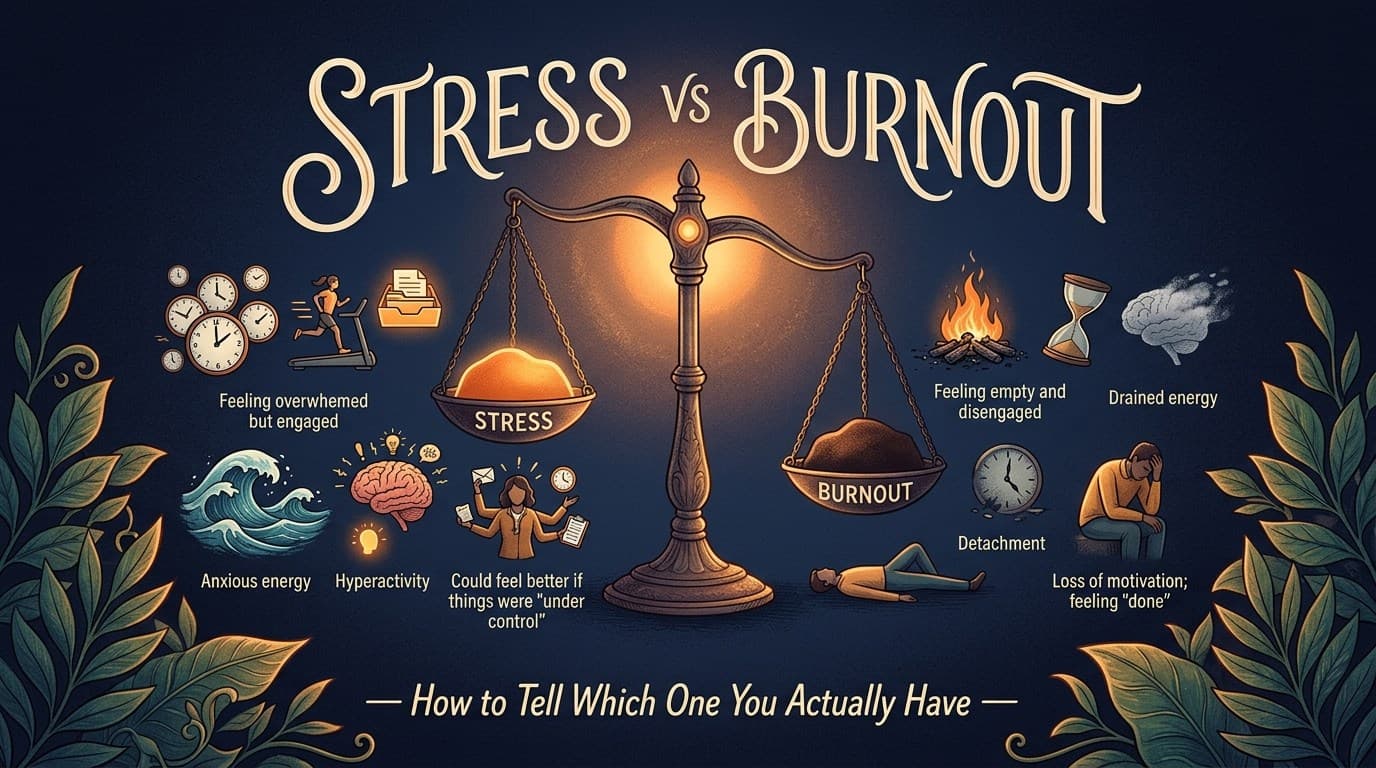
A line worth drawing honestly. Ordinary Sunday scaries are anticipatory friction — they fade by Monday mid-morning once reality turns out to be more manageable than the forecast. But if the dread is severe, if it starts on Saturday, if Monday doesn't dissolve it — if what you feel resembles the flatness and depletion we describe in our guide to stress versus burnout — then the problem isn't Sunday. It's the week. No evening ritual fixes a job that is genuinely harming you, and treating signal as noise just delays the decision the signal is pointing at.
The test question: is it the transition I dread, or the destination? Transition-dread responds to everything in this article. Destination-dread deserves a bigger conversation — with yourself first, possibly with your manager (we include a script in our piece on recovering from burnout while working), and with people who know you.
The Short Version
Friday: fifteen-minute shutdown — list, first move, three rocks, close the lid with intent. Sunday: a standing small pleasure in the evening slot, twenty contained minutes for the calendar if needed, guard the sleep. And if the dread is about the destination rather than the transition — listen to it.
author: "AuroraPath"
A daily practice is the long-term version of all of this — a system that runs calmer all week, not just on Sundays. Find Your Ground, AuroraPath's 30-day mindfulness journal for adults, builds it in fifteen minutes a day. Our free collection of 10 mindfulness worksheets is also an instant free download at aurorapath.store.
From the AuroraPath Store
Find Your Ground
A 30-day mindfulness challenge. 90 beautifully designed pages — instant download.
$19.99
Get Find Your Ground →Instant PDF download · Print at home
AuroraPath
Creator of AuroraPath
Alex Ewing created AuroraPath to make premium mindfulness resources accessible for every family. Grow Calm is the first book in the AuroraPath collection.