Why Your Child's Anxiety Peaks at 3pm: Understanding Circadian Stress Cycles and What to Do About It

Your child falls apart at 3pm. Not always—sometimes it's 2:47, sometimes 3:15—but reliably enough that you've started bracing for it. The irritability, the…

A

AuroraPath

June 23, 2026

Cover illustration for Why Your Child's Anxiety Peaks at 3pm: Understanding Circadian Stress Cycles and What to Do About It

Free Download

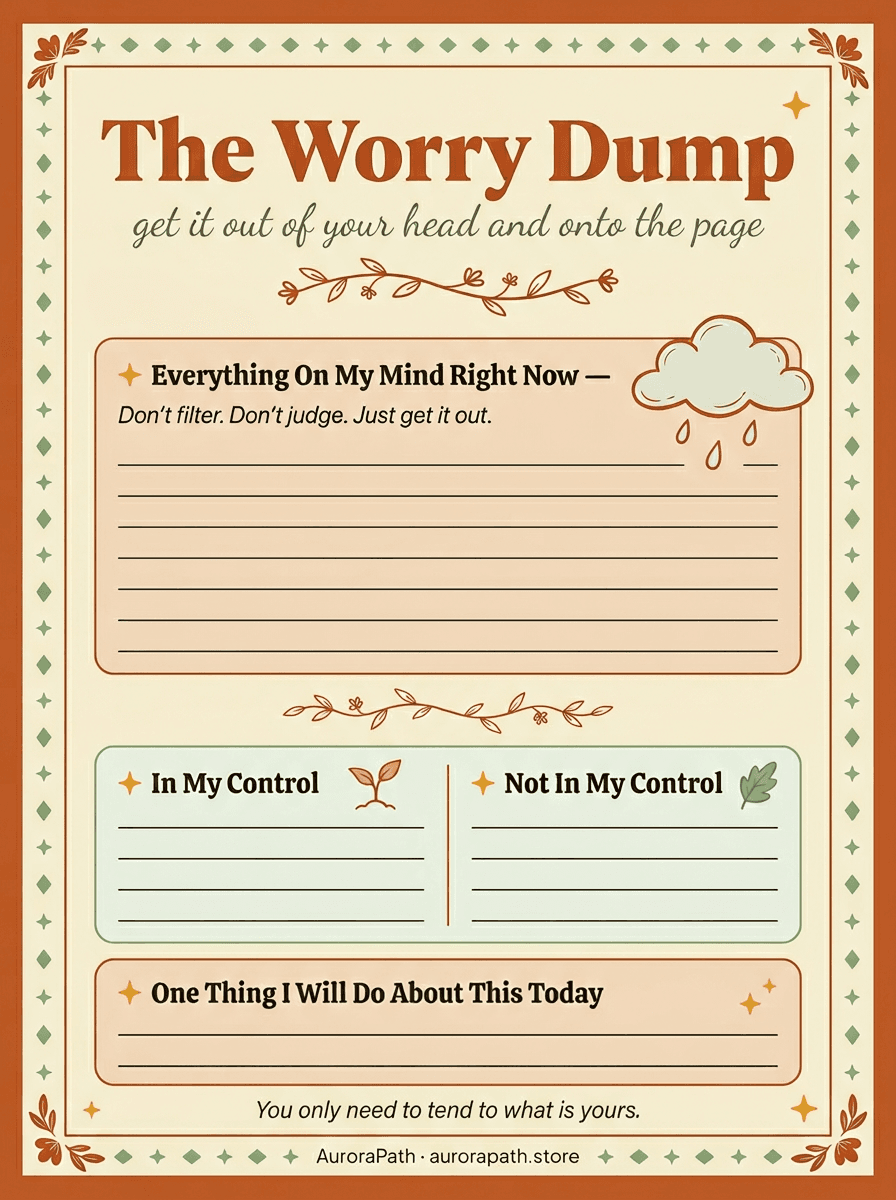
Enjoying this article? These 10 free worksheets go even deeper. 🌱

Claim your free AuroraPath mindfulness worksheet collection instantly.

Instant download · No credit card needed

Sample worksheet preview

+ 9 more worksheets

The 3pm Collapse: Why It Happens and Why You're Not Imagining It

Your child falls apart at 3pm. Not always—sometimes it's 2:47, sometimes 3:15—but reliably enough that you've started bracing for it. The irritability, the tears over nothing, the sudden refusal to cooperate. You assume it's school stress, or sugar, or screen time. It's actually something more predictable: a biological collision between circadian fatigue and accumulated stress from earlier in the day.

Here's the mechanism. Your child's cortisol—the hormone that regulates arousal and stress response—follows a 24-hour rhythm. It peaks in the first hour after waking, then declines steadily through the morning and afternoon. But that decline is not flat. A secondary rise often occurs in late afternoon, especially when sleep is short or the morning was chaotic. Add to that the cumulative weight of six hours of school, social navigation, and low-level stimulation, and by 3pm the nervous system is running on fumes.

The counter-intuitive part: your 7am stress is showing up as your child's 3pm meltdown. A parent who feels rushed at breakfast—even if the child doesn't consciously register the hurry—transmits elevated cortisol to the child through tone, pace, and neurological attunement. That priming makes the child fragile. By afternoon, any small friction (a denied snack, a peer conflict, a transition) triggers visible anxiety or rage. The 3pm crisis is not the cause; it's the symptom of a dysregulated system that started hours earlier.

This is actually good news. It means you have leverage that doesn't require a therapist appointment or a new anxiety protocol. It means the fix begins at bedtime the night before.

The evidence is direct: one week of consistent sleep timing—same bedtime, same wake time, even on weekends—measurably lowers baseline anxiety in children. The biological clock stabilizes. Cortisol rhythm normalizes. By day five or six, you'll notice the 3pm meltdowns shrink or vanish.

That's the entry point. Before you add breathing exercises or afternoon mindfulness, before you investigate school dynamics or food sensitivities, stabilize the circadian foundation. Sleep consistency is the lever that moves everything else.

The 3pm Anxiety Spike: What You're Actually Seeing (And Why It Starts Hours Earlier)

What you witness at 3pm—the sudden irritability, the racing thoughts, the complaint that "everything is wrong"—is not the beginning of your child's anxiety. It is the visible peak of a cascade that started before breakfast.

Your child's cortisol (the stress hormone that regulates alertness and mood) follows a predictable daily rhythm. It peaks within the first hour of waking, then gradually declines throughout the day. But here is the mechanism that matters: if the morning was chaotic—rushed, conflict-heavy, or emotionally tense—your child's nervous system never finished its natural descent. Instead, it remains elevated.

By 3pm, three things collide. First, circadian fatigue: the brain has been awake for 8–10 hours and is genuinely tired, which weakens emotional regulation. Second, accumulated micro-stressors: small conflicts at breakfast, transitions between activities, social friction at school, all of which the child's dysregulated nervous system could not absorb. Third, parental stress transmission: children are neurologically attuned to your emotional state. A parent who feels rushed or anxious at 8am sends a measurable spike in cortisol to the child, even if no words are spoken.

The math is simple but rarely articulated. A child who slept eight hours (insufficient) and woke at an irregular time arrives at 3pm with a nervous system already 40–60% less resilient than a child who slept 9.5 hours and woke at the same time every day. Add a tense morning, and that child's anxiety threshold drops further. By afternoon, a minor trigger—a peer comment, a task that feels hard, a transition—crosses a threshold that would not have been crossed if the foundation were solid.

This is why afternoon breathing exercises or snacks often feel like they work for a day or two, then fail. You are treating the symptom, not the condition.

The corrective move is counterintuitive: to fix 3pm anxiety, you must rewire the morning and the night before. A consistent bedtime, a consistent wake time, and a calm, structured morning—these are the primary interventions. They are not supplementary. They are the foundation on which every other tool (breathing, mindfulness, talk-through) actually lands.

📥 Claim Your Free 10

Get 10 free mindfulness practice pages — no email gymnastics, just the download. [ Claim the Free 10 → ]

How Your Child's Circadian Clock Works—And Why It Breaks Down

Your child's circadian system is not a single clock. It is a distributed network of biological timers—one in the brain's suprachiasmatic nucleus (the master clock), others embedded in the liver, heart, gut, and immune cells—all synchronized to a roughly 24-hour cycle. This network orchestrates when cortisol (the stress hormone) rises and falls, when melatonin (the sleep signal) arrives, and when mood and focus peak or crater.

The master clock runs on a simple equation:

$$\text{Circadian Phase} = \text{Light Input} + \text{Sleep-Wake Timing} + \text{Meal Timing}$$

Light is the strongest signal. Sunlight in the morning resets the clock forward; artificial light at night delays it backward. But sleep consistency and regular meal times are close second and third.

Here is what a regulated 24-hour cortisol curve looks like in a healthy child:

  • 6:00 am (wake): Cortisol spikes sharply—this is the cortisol awakening response. It primes alertness and mood lift.
  • 8:00 am–2:00 pm: Cortisol declines steadily. The child is naturally focused and calm.
  • 3:00 pm–5:00 pm: A small secondary rise occurs as the body prepares for the day's final stretch.
  • 9:00 pm–6:00 am: Cortisol bottoms out. Sleep deepens.

Now, here is what happens when the circadian system breaks down.

A child who went to bed at 10:30 pm instead of 9:00 pm has lost 90 minutes of sleep. Their cortisol awakening response the next morning is blunted—they wake foggy, not primed. By mid-morning, the system is already behind. A rushed, conflict-filled breakfast (parent stressed, no routine, screens on) further dysregulates the morning cortisol curve. The child's nervous system never stabilizes.

By 3:00 pm, two forces collide: the circadian system's natural afternoon fatigue point and accumulated stress load from 9 hours of an unregulated day. Cortisol does not decline as it should. Instead, it plateaus or spikes—and the child's anxiety becomes visible. Irritability, restlessness, meltdown-proneness, or shutdown.

The child is not "having a bad afternoon." The child's biological clock has been knocked out of sync since the previous night.

The Cortisol Awakening Response: Why Morning Matters More Than You Think

Cortisol is your child's stress hormone. It rises sharply in the first 30–60 minutes after waking—a surge called the cortisol awakening response (CAR)—then declines in a predictable curve throughout the day. This is normal and necessary; that morning spike primes the body for wakefulness and attention.

But here's the mechanism that matters: the shape of that curve depends entirely on how the morning unfolds.

In a regulated morning—calm wake time, predictable routine, unhurried transitions—cortisol peaks gently and follows a smooth downward slope. By 3pm, it has fallen to a low, stable baseline. The child arrives at afternoon tasks with a calm nervous system.

In a dysregulated morning—rushed alarm, parental stress, conflict over breakfast, unpredictable timing—cortisol spikes higher and remains elevated longer. The decline is shallower. Mathematically, you can think of it this way:

$$\text{Afternoon cortisol baseline} = \text{(CAR magnitude)} + \text{(morning stress load)} - \text{(hours since wake)}$$

A child who wakes to shouting, a parent checking their phone with visible anxiety, or an unpredictable breakfast schedule experiences a steeper CAR and a slower decay. By 3pm, that child's cortisol hasn't fallen as far as it should. The nervous system is still primed.

Then add the afternoon's own weight—fatigue, sensory input, social friction at school, hunger—and the system tips into visible dysregulation.

Here's a concrete example. A 7-year-old with a 9pm bedtime and 7am wake time, who eats breakfast with a calm parent and leaves for school without rushing, typically shows a CAR peak of 10–12 nanomoles per litre, declining to 3–4 by 3pm. The same child, woken at 6:30am by an alarm after a 10:30pm bedtime (only 8 hours of sleep), with a parent who is visibly stressed and checking email at the table, often shows a CAR peak of 15–18 and a 3pm level of 6–8. That difference—a baseline that's twice as high—makes anxiety symptoms twice as likely to emerge.

Your child's morning cortisol curve is not fixed. It responds directly to sleep consistency, parental calm, and routine structure. You cannot control the 3pm trigger, but you can reshape the entire day's hormone trajectory by changing what happens before 8am.

The Stress Cascade: How a Rushed Breakfast Becomes a 3pm Meltdown

Here's the mechanism in plain form: your child's nervous system does not compartmentalize stress. A rushed, conflict-heavy morning does not resolve by 9am—it compounds.

When you're moving fast at breakfast, your child picks up your cortisol elevation through mirror neuron activation and your tone of voice. Your child's own cortisol rises in response, even if no one raises their voice. This is not metaphorical; it is measurable in saliva samples within minutes.

That elevated cortisol does not disappear. Instead, it primes the amygdala (the brain's threat-detection center) to interpret neutral events as threats. A teacher's neutral comment, a peer's side glance, a minor schedule change—all register as larger stressors than they would on a calm morning.

By 11am, your child has already burned through mental and emotional reserves. The circadian system, which normally supports mood regulation, is working against a deficit. Lunch provides a brief reprieve, but the afternoon circadian dip (the biological energy trough that occurs in most humans between 2pm and 4pm) arrives on top of this accumulated fatigue.

At 3pm, the collision happens. Your child's cortisol should be declining naturally, but instead it spikes again—because the nervous system is already dysregulated, and the circadian dip feels like a threat rather than a normal rhythm. The result is visible: irritability, emotional fragility, or a full meltdown.

The worked example: A child goes to bed at 10:30pm (instead of 9pm), wakes at 7am groggy. Breakfast is rushed; parent is checking email; no real conversation. Child arrives at school with a primed nervous system and a sleep debt. By 2:45pm, a peer bumps into them in the hallway. On a regulated morning, this is a non-event. On this morning, it triggers a 20-minute anxiety spiral.

The parent often blames the peer or the school. The actual culprit started 12 hours earlier.

What this means for you: the 3pm crisis is preventable, but not by fixing 3pm. A consistent 9pm bedtime, a calm 20-minute breakfast routine (no screens, no rushing), and your own visible calm—these rewire the entire day's stress architecture. You are not managing anxiety; you are preventing it by restoring circadian alignment.

Sleep Debt as a Circadian Amplifier: Why Last Night's Bedtime Shapes This Afternoon's Anxiety

Here is the mechanism: a child who sleeps 90 minutes less than their biological need accumulates what researchers call sleep debt—a neurological deficit that doesn't vanish after one good night. That debt weakens the circadian system's ability to regulate cortisol and mood hormones the following day.

The math is straightforward. If your child needs 10 hours of sleep and gets 8.5 hours, the debt is:

$$\text{Sleep Debt} = \text{Required Sleep} - \text{Actual Sleep} = 10 - 8.5 = 1.5 \text{ hours}$$

That 90-minute shortfall doesn't distribute evenly across the next day—it concentrates in the afternoon, precisely when the circadian system is already cycling toward a secondary cortisol rise. A tired child has fewer neurological resources to buffer stress.

Think of the circadian clock as a governor on a fuel tank. When sleep is consistent, the governor holds steady; cortisol rises and falls on schedule. When sleep is short, the governor becomes erratic. By 3pm, a sleep-deprived child's cortisol doesn't follow the expected decline—it plateaus or spikes, amplifying any afternoon stressor (transition to a new activity, peer conflict, sensory overload) into visible anxiety or irritability.

The research is unambiguous: children who lose one hour of sleep per night for five consecutive nights show measurable increases in anxiety and ADHD symptoms by day three. The effect compounds—a child running a 60-minute sleep debt every night for two weeks arrives at Friday with a nervous system that is functionally 8–10 hours sleep-deprived.

Here is what matters: you cannot outrun circadian debt with willpower or afternoon breathing exercises. A child who slept 8.5 hours at 10:30pm will struggle with anxiety at 3pm no matter how calm the classroom is. The anxiety is not a behavior problem or a sign of weakness; it is a predictable output of insufficient sleep.

One week of enforced, consistent sleep (same bedtime, same wake time, no exceptions) resets the debt to zero. Within three to five days, most parents report a visible drop in afternoon meltdowns. The circadian system recalibrates, and the child's anxiety baseline drops because the biological clock is no longer working against them.

Your Own Nervous System Is Contagious: Parental Stress and Child Cortisol

Here is the mechanism: your child's nervous system is not sealed off from yours. A child's brain is wired to detect and mirror a parent's stress state through a process called emotional contagion — the automatic synchronization of physiological arousal between two people in close proximity.

When you rush through breakfast, your cortisol is elevated. Your child absorbs that signal.

The neuroscience is straightforward. A parent's elevated stress hormones trigger the release of cortisol and adrenaline in the child's body, even without explicit conflict or words. This happens through mirror neurons (brain cells that fire both when you act and when you observe someone else act) and through the child's olfactory and behavioral reading of parental state. A rushed parent has a different vocal tone, a tighter posture, faster movements — all of which register as threat in a child's developing amygdala (the brain's alarm center).

By 3pm, that priming compounds. The child arrives at the afternoon already running a higher baseline of cortisol. A minor frustration — a denied snack, a peer conflict, a transition — that would normally be manageable becomes a meltdown because the nervous system has no buffer left.

Research on parental stress and child cortisol shows a direct dose-response: the more chronic stress a parent carries, the higher the child's resting cortisol levels. One longitudinal study found that children of parents with high perceived stress showed cortisol patterns that remained elevated throughout the day, with a flattened circadian rhythm — meaning the normal decline from morning to evening never happened. These children were in a state of low-grade physiological alert all afternoon.

The practical implication is counterintuitive: managing your own nervous system is not self-care luxury — it is a direct intervention on your child's anxiety. A parent who takes three conscious breaths before breakfast, who moves through the morning with intention rather than panic, who models calm under small frustrations, is literally lowering the child's cortisol load.

This does not require perfection. It requires consistency. A parent who is calm 70 percent of the time creates a measurably different neurochemical environment than one who is reactive 70 percent of the time. Your child's 3pm anxiety is not a reflection of your parenting failure — it is a signal that the morning stress load was too high, and that your own regulation is the first place to intervene.

From the AuroraPath Store

Grow Calm

A 30-day mindfulness challenge for kids aged 7–11. 96 beautifully illustrated pages — instant download.

$15.99

Get Grow Calm →

Instant PDF download · Print at home

A

AuroraPath

Creator of AuroraPath

Alex Ewing created AuroraPath to make premium mindfulness resources accessible for every family. Grow Calm is the first book in the AuroraPath collection.

whychildanxietypeaksunderstanding
Share:FacebookPinterest