Your brain runs a persuasive little argument every working day: no time to stop — pushing through is faster. It feels true at 11am, truer at 3pm, and it is measurably false. The push-through strategy loses to the break strategy on the evidence, and not by a little — the only question the research leaves open is what kind of two minutes you take.
Here's what the science actually says, nine micro-breaks ranked by recovery value, and how to make them happen automatically — because knowing breaks work has never once caused anyone to take them.
The Evidence, Briefly
The headline study is a 2022 meta-analysis in PLOS One (Albulescu and colleagues) pooling 22 experiments on micro-breaks — pauses of ten minutes or less. The verdict: micro-breaks reliably reduce fatigue and increase vigour — the felt sense of having energy. For performance, the picture is dose-dependent: short breaks held or improved performance on most tasks, but recovering from heavily depleting work needed breaks longer than ten minutes. Translation: the two-minute break genuinely protects how you feel across the day, and protecting how you feel is what keeps the afternoon from falling off a cliff.
The deeper logic comes from attention science: focused work draws on a depletable reserve, and attention restores through disengagement — particularly the soft, effortless attention of looking at natural things, movement, and genuine mental idling. Which immediately explains the ranking below, including its scandal: the scroll break, the break most of us actually take, restores almost nothing — same chair, same screen, same directed attention, plus a little fresh arousal. It's a channel change wearing a break's clothing, and studies of phone "breaks" keep finding they recover poorly compared to almost anything else.
Nine Two-Minute Breaks, Ranked
Roughly in descending order of restorative value per minute:
1. The outdoor sky break. Step outside (or fully out a window), look at something far away and preferably green or sky-ish. Distance focus rests the eyes; natural scenes restore attention faster than built ones — even brief nature exposure measurably helps. The king of micro-breaks.
2. The movement snack. Twenty squats, a stride down the corridor and back, two flights of stairs. Movement clears the physiological stress residue that sitting lets pool — and it's the best counter to the postural sludge of desk work.
3. The breath reset. Ninety seconds of long-exhale breathing or two or three physiological sighs — the fastest evidence-backed downshift available, doable in any chair without anyone noticing.
4. The window stare. Genuine idle gazing, mind off the leash. This is the one that feels most like slacking and is closest to what attention restoration actually requires — effortless, unfocused, content-free.
5. The stretch-and-scan. Stand, stretch tall, then a one-minute body scan: jaw, shoulders, hands, feet. You'll find the tension you didn't know you'd accumulated since 9am — finding it early is the point.
6. Water-and-walk. Fetch a glass of water from the far kitchen. Hydration plus steps plus disengagement in one errand — the humble all-rounder.
7. The doorway chat. Two minutes of low-stakes human talk about nothing important. Genuine social contact restores; the caveat is it must be chosen and light — a hallway moan about workload is work in disguise.
8. The tidy. Clear the desk, wash the mug. Mild, useful, weakly restorative — better than nothing, mostly because of what it displaces.
9. The scroll. Ranked for honesty: near-zero restoration, frequently negative (you return with the news in your nervous system). If you must, timebox it and don't call it a break — call it consumption, and take a real break too.
The 90-Minute Rhythm
When should breaks happen? The useful heuristic comes from work-rhythm research: alertness runs in roughly 90-to-120-minute cycles, and pushing past a trough on caffeine and deadline fear produces the late-morning fog everyone blames on sleep. The practical version: a real micro-break every 60–90 minutes, pre-empting the trough rather than crashing into it — plus the meta-analysis's footnote that genuinely depleting stretches (deep focus, emotional labour) deserve a proper 10–15 minute recovery, not a heroic two.
If you track nothing else, track the afternoon: people who break well report the 2–4pm stretch transforming from survival to ordinary work. That window is where the compounding shows up first.
Making Breaks Automatic (Because Your Brain Lies)
The mid-task brain systematically overvalues continuing — stopping feels like loss even when it's profit. So never rely on feeling like a break; install triggers:
Anchor breaks to events, not willpower. After every meeting that ends: stand and water-walk before sitting back down. After sending anything substantial: sky break. Calendar transition = movement snack. Event-anchored habits run themselves within weeks — the same cue-stability principle as every other habit.
Make one break sacred and scheduled. A mid-morning and mid-afternoon ten-minuter, in the calendar, treated like a meeting with someone mildly important. Two fixed anchors plus event-triggered micro-breaks covers a full day.
Pair it with the boundary work. Breaks only exist where ambient availability doesn't eat them — notifications off during the ten minutes, and the response-time expectations that make ten unreachable minutes unremarkable.
The arithmetic to keep in view: five two-minute breaks is ten minutes a day — about 2% of working hours — buying measurably lower fatigue, a survivable afternoon, and less of the day's stress riding home in your shoulders. It is the cheapest deal in occupational health, and the only obstacle is a feeling. The feeling is wrong.
author: "AuroraPath"
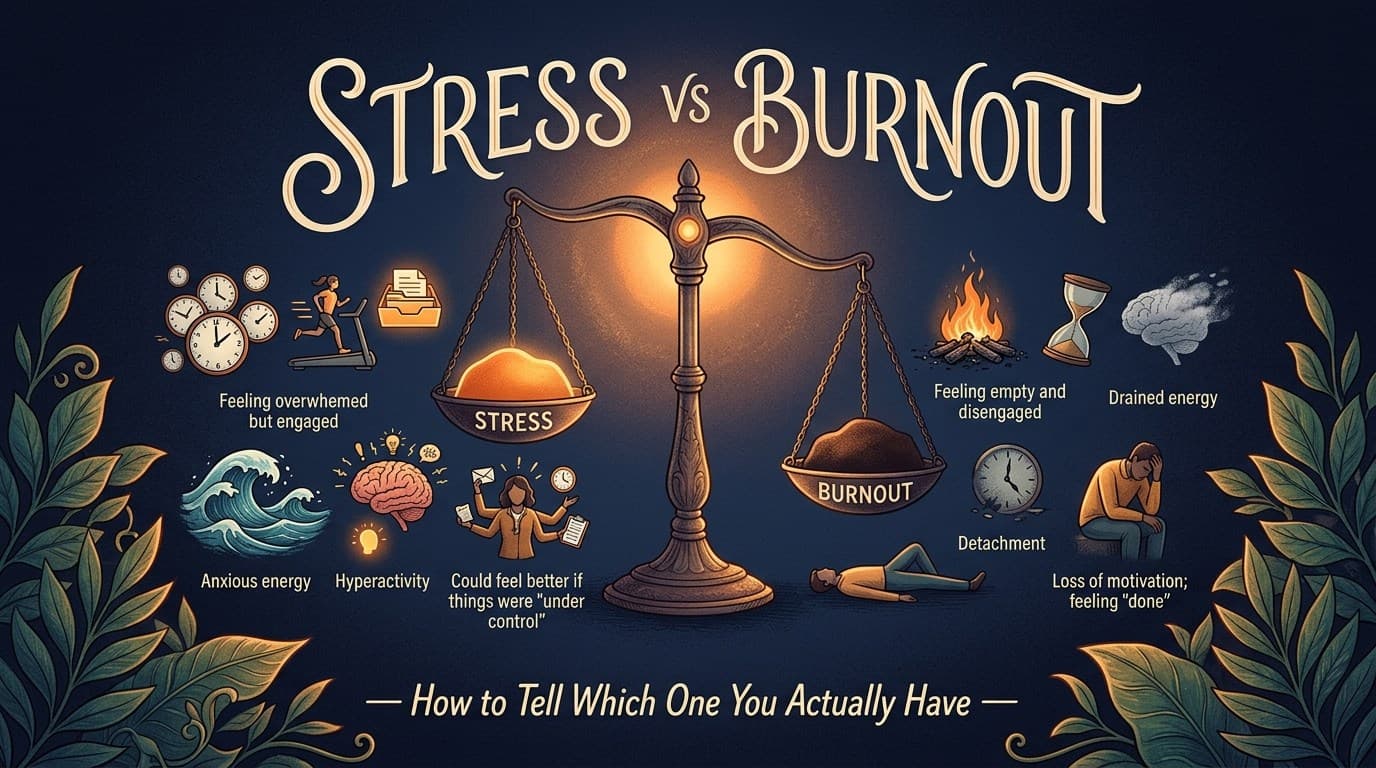
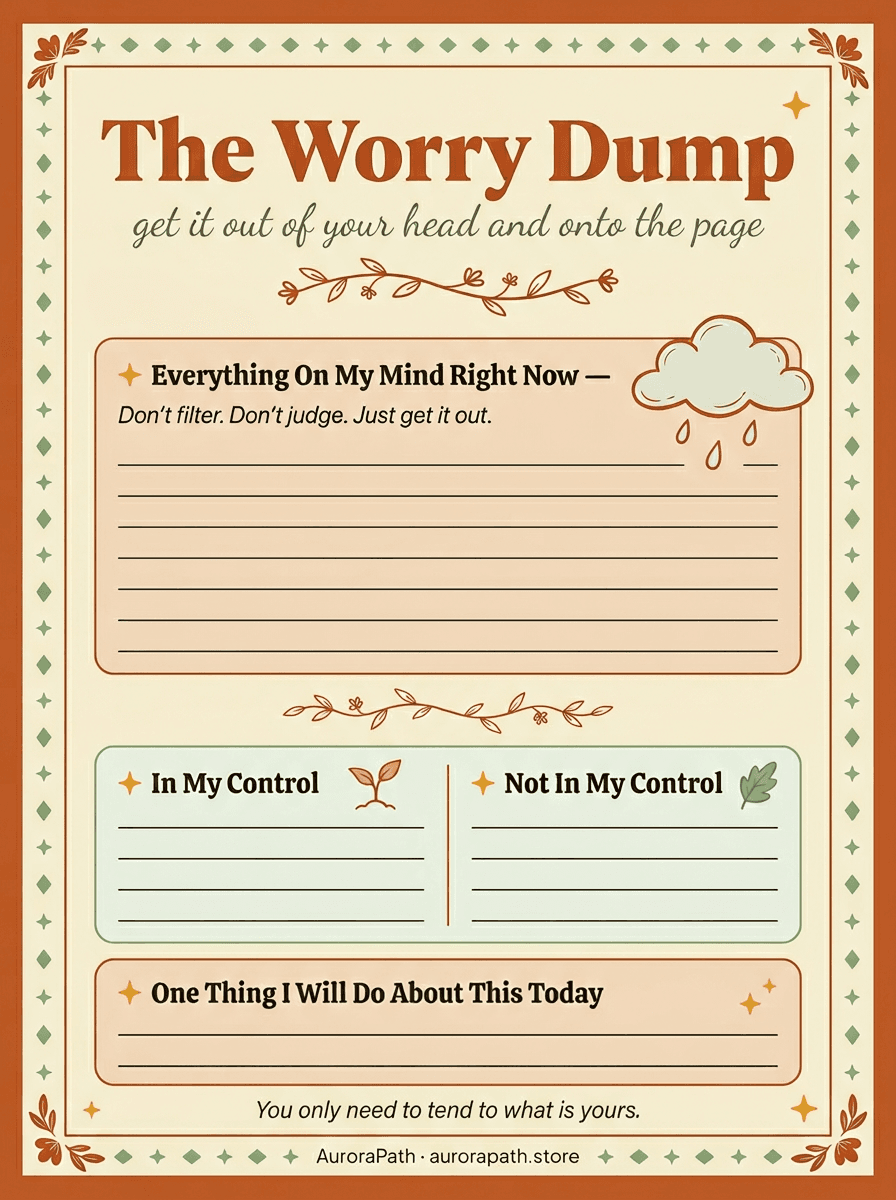
If your days are depleting faster than ten-minute breaks can patch, that's a different conversation — start with stress versus burnout. And for the daily practice underneath it all, Find Your Ground — AuroraPath's 30-day mindfulness journal for adults — builds recovery into the day's structure. Free worksheets at aurorapath.store.
From the AuroraPath Store
Find Your Ground
A 30-day mindfulness challenge. 90 beautifully designed pages — instant download.
$19.99
Get Find Your Ground →Instant PDF download · Print at home
AuroraPath
Creator of AuroraPath
Alex Ewing created AuroraPath to make premium mindfulness resources accessible for every family. Grow Calm is the first book in the AuroraPath collection.