
Most calm-down content for children falls into one of two camps.
There is the toddler content — blow out the birthday candles, pretend to smell the flowers — which is genuinely brilliant for a four year old and slightly insulting to a ten year old who knows exactly what you are trying to do.
And then there is the teenage content — journaling, cognitive reframing, talking it through — which assumes a level of emotional insight and language that most children under twelve are still developing.
The seven to eleven window is its own thing. These children are old enough to understand what is happening in their bodies and minds. They are old enough to use real techniques and remember them outside of a calm moment. But they are still young enough that they need structure, guidance, and an adult alongside them — they cannot do this entirely on their own yet.
Here is what actually works for this specific age group, and why.
First — Why the Strategy Needs to Come Before the Moment
This is the single most important thing I can tell you about teaching calm-down strategies to children in this age range.
The strategy has to be introduced, practised, and made familiar during a calm ordinary moment — not during the crisis itself. When a child is dysregulated their prefrontal cortex — the thinking, reasoning part of the brain — is essentially offline. They cannot learn a new skill in that state. They can only access skills that are already automatic.
So your job is to teach the strategy when everything is fine. Practice it together over breakfast. Put it on a card on the fridge. Do it as a bedtime ritual. Make it so familiar that when the difficult moment comes the child reaches for it automatically — not because you reminded them, but because it is already part of their toolkit.
With that said — here are the strategies.
Body-Based Strategies
Children aged seven to eleven are often more connected to physical sensation than abstract emotion. Starting with the body is frequently more accessible than starting with feelings.
Bilateral tapping. This one is underused and remarkably effective. Ask your child to gently tap alternating knees — left, right, left, right — slowly and rhythmically while taking slow breaths. The alternating bilateral stimulation activates both hemispheres of the brain and has a measurable calming effect on the nervous system. It sounds strange until you try it. Most children find it genuinely soothing within about sixty seconds.
The shake it out. When emotions are big the body needs to move. Shaking — literally shaking your hands, your arms, your whole body for thirty seconds — discharges the physical tension that builds up with strong emotion. Animals do this instinctively after a stressful event. Humans have largely forgotten how. Give children permission to shake it out and most of them take to it immediately.
Cold water on the wrists. Running cold water over the inner wrists activates the vagus nerve and can bring down heart rate and cortisol quickly. It is simple, it is available almost everywhere, and children aged seven and up can use it independently. Worth teaching as a self-regulation tool for school.
Progressive muscle relaxation — the quick version. Squeeze every muscle in your body as tight as you can for five seconds, then release completely. Repeat three times. The contrast between tension and release teaches children what physical relaxation actually feels like — which is not something most children have ever been deliberately taught.
Breathing Strategies
At this age children can understand why breathing works — the science is genuinely interesting to most seven to eleven year olds — which makes them more likely to actually use it.
A simple explanation: when we are stressed our breathing gets fast and shallow which sends a message to the brain that there is danger. Slow breathing sends the opposite message — everything is okay, you are safe. The brain believes the body.
Box breathing. Breathe in for four counts, hold for four, out for four, hold for four. Repeat four times. The square shape is easy to remember and trace with a finger which gives children something to do with their hands. Most children aged eight and up can learn this in one sitting.
Star breathing. Draw or imagine a five-pointed star. Trace each point — breathe in going up to the point, breathe out coming down. Five points, five breath cycles. The visualisation element makes it more engaging than counting alone, and the star shape is easy to draw anywhere — on a steamy mirror, on a notebook, in the air.
Extended exhale. The simplest of all. Breathe in for three counts, breathe out for six. The extended exhale activates the parasympathetic nervous system — the rest and digest response — more directly than an equal breath ratio. Children as young as seven can use this once it is explained and practised.
Cognitive Strategies
By around age eight or nine children begin to have enough metacognitive awareness — the ability to think about their own thinking — to use more cognitive approaches alongside body-based ones.
Name it to tame it. Research consistently shows that putting a name to an emotion reduces its intensity. Not just sad or angry but specific — disappointed, embarrassed, frustrated, overwhelmed. The more precise the language the more regulation it provides. Building emotional vocabulary is one of the highest leverage things you can do for a child's emotional regulation.
The three question check. When a child is caught in an anxious thought spiral — what if this happens, what if that happens — three questions can interrupt the cycle. Is this definitely true? What is the most likely thing that will actually happen? What would I tell a friend who was thinking this? These questions require the thinking brain to engage which naturally reduces the emotional intensity.
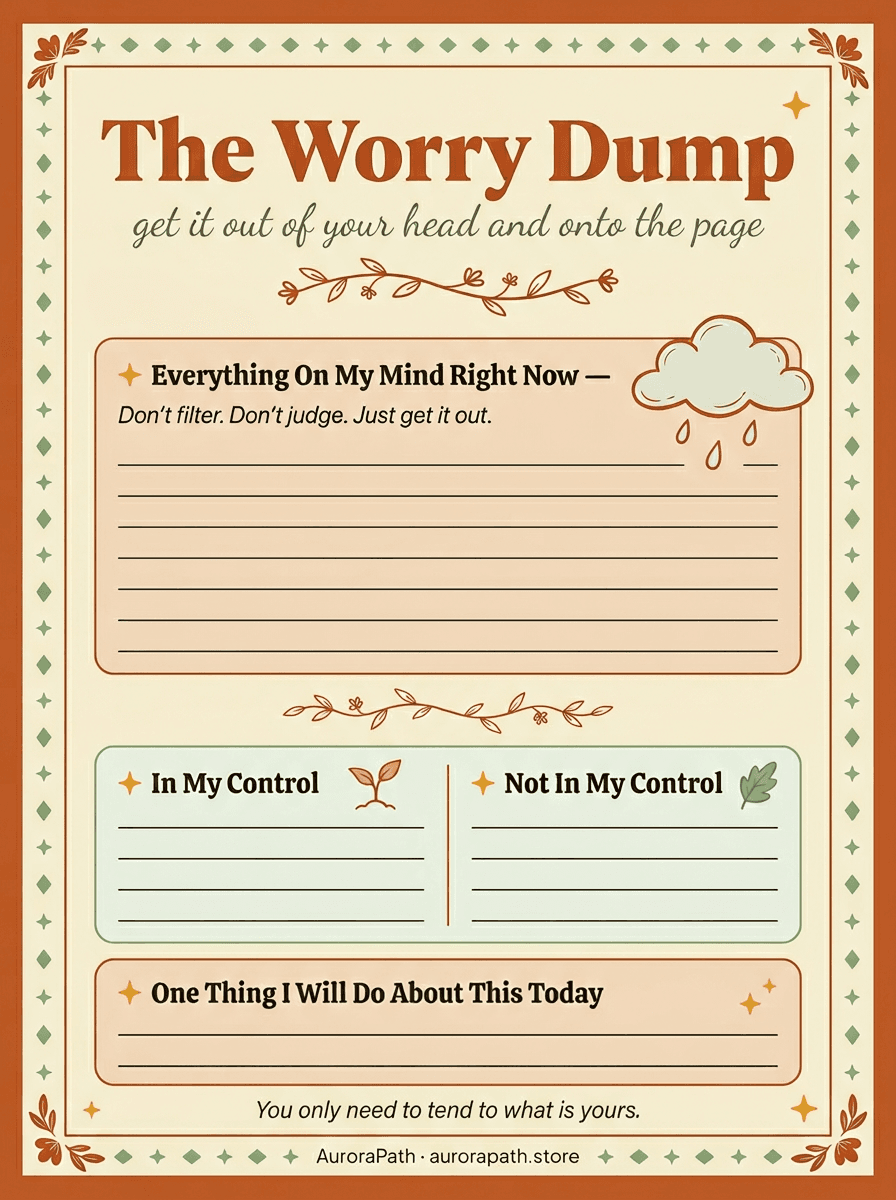
The worry time technique. For children who ruminate — who return to the same worrying thoughts repeatedly — designate a specific ten-minute worry time each day. When a worry comes up outside of that time they acknowledge it — yes, I hear you, we'll talk about you at worry time — and set it aside. It sounds too simple to work. It genuinely works.
Connection Strategies
For many children aged seven to eleven the most effective calm-down strategy is not a technique at all — it is the presence of a trusted adult.
Co-regulation — the process of an adult's regulated nervous system helping to regulate a child's dysregulated one — is not a sign that a child is too dependent or not developing independence. It is neurologically normal and appropriate. Children at this age are still developing the capacity to fully self-regulate. They need to borrow a regulated adult's calm nervous system to help their own settle.
This means that sometimes the best thing you can do is simply sit close. Breathe slowly. Stay calm yourself. And wait.
Your regulated presence is a strategy. One of the most powerful available.
Building the Toolkit Together
The most effective calm-down toolkit is one the child helped build. Sit down together during a calm moment — not after a difficult one — and make a list of what helps them. Draw it, write it, stick it somewhere visible.
Some children want a list of five strategies in order — try this first, then this, then this. Some want one strategy they trust completely. Some want different strategies for different situations — one for school, one for home, one for bedtime.
The act of building the toolkit together does something important beyond the practical. It tells your child that you take their emotional life seriously. That you believe they can learn to navigate difficult feelings. That you are invested in helping them develop real tools — not just get through the next moment.
That message, repeated over time, is itself one of the most regulating things a child can experience.
A Note on Consistency
None of these strategies work the first time. Most of them work reliably by the twentieth time. The child who shrugs off box breathing in week one is often the child using it independently in week six — because the practice made it automatic.
The goal is not to find the perfect strategy. The goal is to find a good enough strategy and practice it until it becomes instinctive.
That takes time. It takes patience. And it takes a parent or educator who believes it is worth the investment.
It is.
Related reading: anger management activities for kids and 10 mindfulness games for kids.
Grow Calm walks children aged 7-11 through five emotional arcs over 30 days — including an entire arc dedicated to breathing tools and calm-down strategies. Each activity is designed to be completed in about fifteen minutes and builds on the previous day. By the end of the 30 days children have a complete toolkit they have practised and made their own. Learn more at aurorapath.store/grow-calm.
From the AuroraPath Store
Grow Calm
A 30-day mindfulness challenge for kids aged 7–11. 96 beautifully illustrated pages — instant download.
$15.99
Get Grow Calm →Instant PDF download · Print at home
AuroraPath
Creator of AuroraPath
Alex Ewing created AuroraPath to make premium mindfulness resources accessible for every family. Grow Calm is the first book in the AuroraPath collection.